
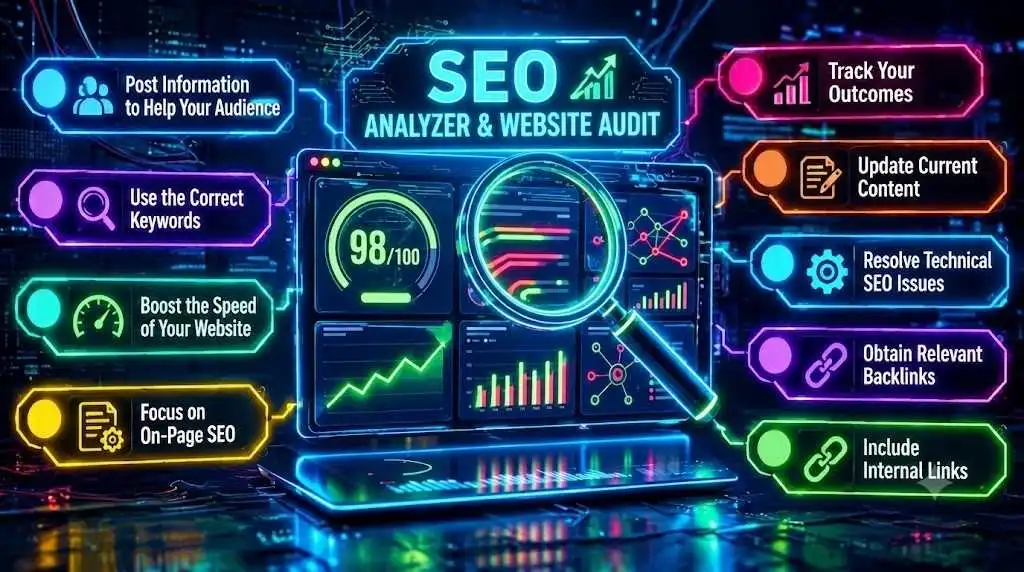
Using an SEO Analyzer & Website Audit, you can identify technical and on-page issues that may impact the functionality of your website. Broken links, page speed, missing meta descriptions, indexing issues, mobile usability, and other SEO problems that could impact Improve Website Ranking can all be checked by it.
Regular website audits help you find areas that need Improve Website Ranking and maintain your website’s search engine optimization. Resolving these problems on a regular basis will help you Improve Website Ranking and give visitors a better experience.
Improve website Ranking of Your Website: Good SEO Tips
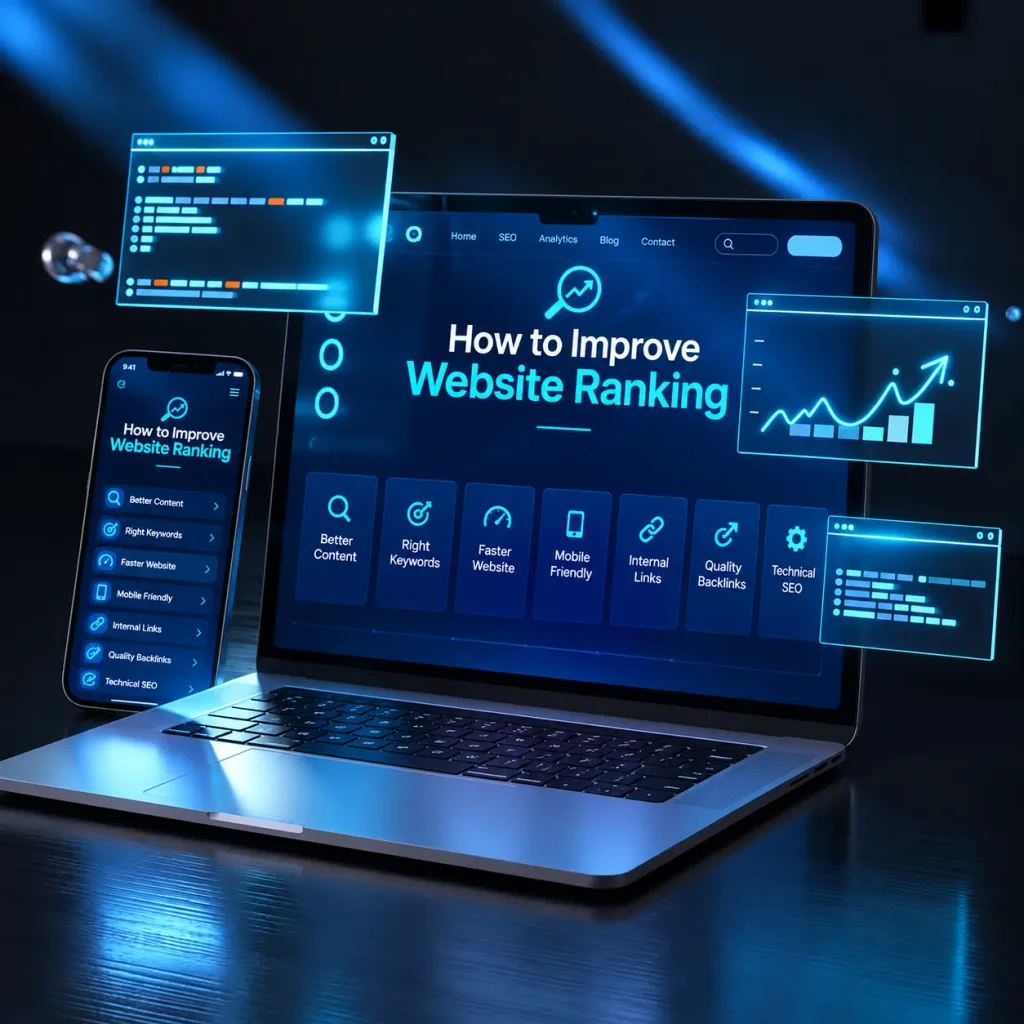
Many website owners have the same aim of getting their pages to the top of Google. However, Improve Website Ranking demands more than simply adding a few keywords. The content, speed, mobile experience, links, and overall value of a website are just a few of the things the fact that search engines consider.
Start with the basics and begin improving them if you’re trying to figure out how to raise your website’s rank.
1. Post Information to Help Your Audience
Useful content is the first step in effective SEO. Consider what your readers truly want to know before you commence writing an article.
For example if a person looks up “Improve Website Ranking ” they usually want choices instead of a page that just repeats the same word over and over.
Create content that gives forward explanations real life examples and solves real problems. People are more likely to stay on your website and look at pages if they think your page is helpful.
2. Use the Correct Keywords
Keywords assist search engines interpret the topic issue of a webpage. Start by choosing search terms that are more likely to get favored by your target audience.
In the page title, main heading, introduction, URL, and pertinent subheadings, use your primary keyword. The article may also make use of related terms.
Maintaining natural language is crucial. People should be the primary audience for a page, not just search engines.
3. Boost the Speed of Your Website

Waiting for a webpage to load is something that nobody enjoys. Particularly for users of mobile devices, a slow website can make for a bad experience.
One of the primary causes of slow websites was large images. Loading time can be decreased by compressing images, removing extra components, or improving hosting or caching.
It is important to make sure that your key pages load correctly.
4. Focus on On-Page SEO
This is the aspect of your page that you have direct control over. Pay attention to:
.Headings and page titles
.URLs, alt text for images, and meta descriptions
.Internal connections
.Structure of content
It is also more simple for viewers to scan and find the information they need when an article is set up into distinct sections.
5. Include Internal Links
Your website’s various pages are connected by internal links.They are useful when one article naturally relates to another.
For some reason, an article about SEO analysis might be of use to a blog about website ranking.
This helps search engines comprehend the connections between the pages on your website and provides visitors with additional information to explore.
6. Obtain Relevant Backlinks

Links pointing to your website from other websites are called backlinks. Links from reliable and pertinent websites can increase the authority of your website.
Instead of attempting to gather a lot of random links, concentrate on producing something valuable enough that other websites would want to link to it.
Links can naturally be drawn to original research, helpful manuals, resources, and educational articles.
7. Resolve Technical SEO Issues
Sometimes a website has excellent content, but there are still technical issues that need to be fixed.
You can better understand what needs to be fixed by identifying these problems with the aid of an SEO audit.
8. Update Current Content
Creating a blog and then not seeing it is rarely a good idea. Search intent can shift, links may stop operating, and information may become out-of-date.
Daily check older articles and update any current information, links, examples, and statistics. If an article is still useful, editing it can give it new lease in life.
9. Track Your Outcomes
Use a look at the results of your changes because SEO takes time.
Track organic traffic, impressions, clicks, keyword positions, and conversions in Google Search Console and Analytics. This shows the pages that are working and those that need additional work.
Final Conclusions
It takes more than one tactic to get to the top of Google when learning Improve Website Ranking. It necessitates constant work across various SEO domains. Whether you are optimizing a site yourself or partnering with a freelance digital marketer in Palakkad, the core focus must remain on producing original, high-intent content, targeting pertinent keywords, Improve Website Ranking, and ensuring mobile-friendliness.
In addition to on-page optimization, building a solid internal linking structure and securing high-quality backlinks from reliable websites are fundamental to mastering Improve Website Ranking. Technical SEO cannot be overlooked either—regularly auditing your website for crawl errors, indexing issues, and broken links ensures search engines can effortlessly index and reward your content.